

From dim launch-era screens to IPS displays, custom shells, flash cartridges, and modern restoration
Why the GBA Became a Modder’s Favorite
Pick up an original Game Boy Advance today and two things stand out. The first is how comfortable it feels. The wide body, generous controls, and straightforward layout still suit long play sessions. The second is how hard it can be to see the screen.
That contrast explains much of Game Boy Advance modding history. Nintendo built a capable, durable handheld with an excellent game library, but the launch model left obvious room for improvement. Players wanted better lighting. As the hardware aged, they also needed replacement shells, buttons, speakers, batteries, and power components. Each limitation became an invitation to experiment.
The GBA was also approachable. Its internals were less intimidating than those of many later portable systems, replacement consoles were once inexpensive, and the growing internet made it possible for hobbyists to compare notes. Over time, isolated repairs and homemade modifications developed into a global ecosystem of parts suppliers, video creators, specialty shops, open-source designers, and boutique builders.
The result is a platform that can be preserved in nearly original condition or rebuilt into something Nintendo never sold: a bright, rechargeable, personalized handheld designed for modern daily use.

This article contains affiliate links. As an Amazon Associate, Console Canyon earns from qualifying purchases, at no extra cost to you. Learn more.
Table of Contents
The Original GBA Era
A powerful handheld with a difficult screen
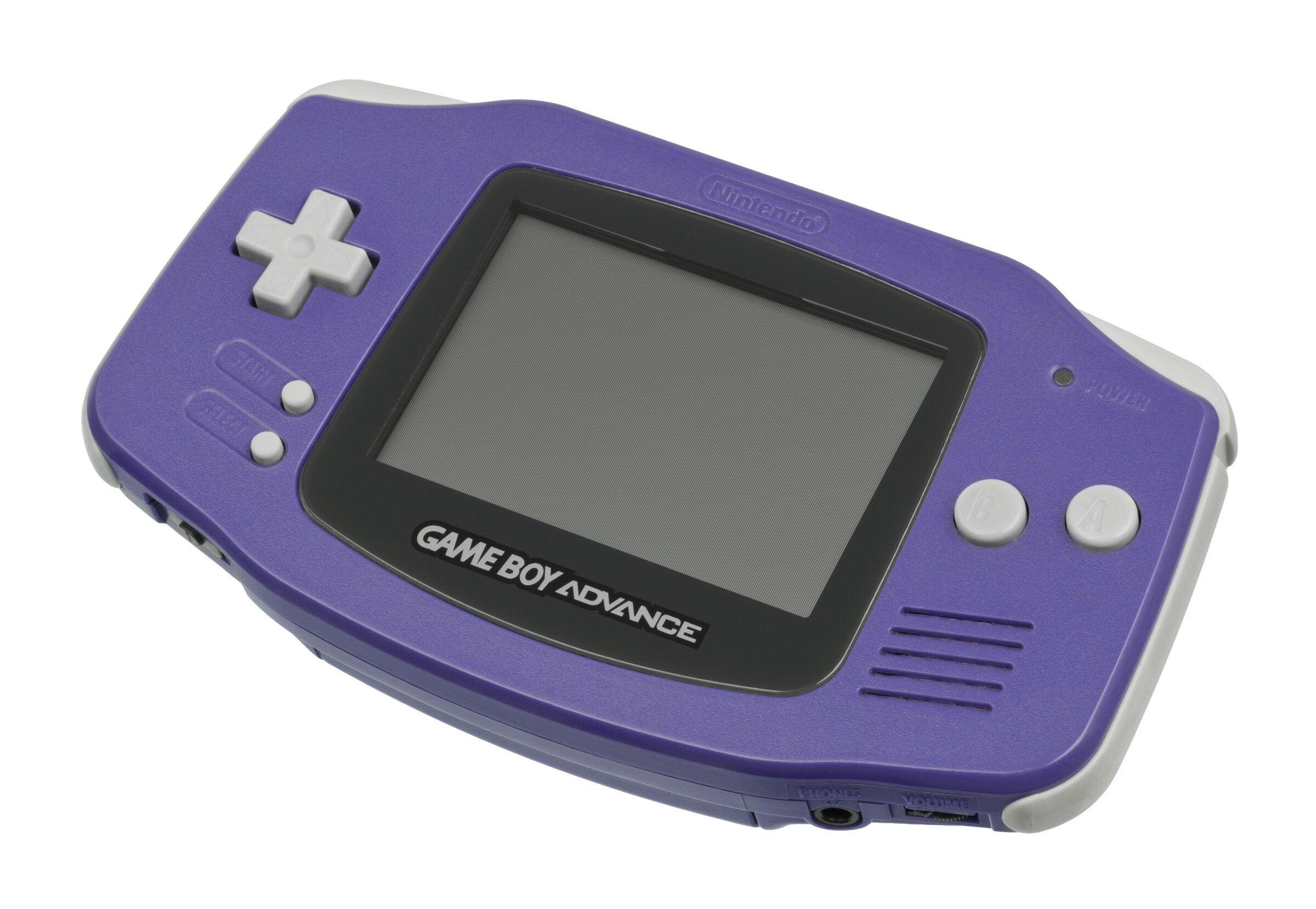
Nintendo released the Game Boy Advance, model AGB-001, in Japan on March 21, 2001. North America followed on June 11, and Europe on June 22. The system delivered a major technical leap over the Game Boy Color while retaining backward compatibility with Game Boy and Game Boy Color cartridges.
Its most discussed weakness was the reflective LCD. The screen had no built-in light, so it depended on whatever light happened to be around the player. In bright daylight, it could look crisp and colorful. In a dim room, on a flight, or in the back seat of a car, the experience could become an exercise in tilting the console toward the nearest lamp.
Accessory manufacturers responded with clip-on lamps, magnifiers, and flexible LED “worm lights.” These products helped, but they added bulk, created glare, and illuminated the screen unevenly. For more technically inclined owners, the obvious question was whether light could be installed inside the console instead.
Early lighting and cosmetic experiments
One of the best-known early solutions was Triton Labs’ Afterburner, a frontlight kit introduced in 2002. A frontlight sits above the LCD and directs light across its surface. Installation called for opening the console, modifying internal plastic, carefully positioning the lighting material, and completing electrical work. Results depended heavily on the installer’s patience and skill.
Other early GBA mods were more practical. Owners replaced damaged lenses, repaired battery contacts, cleaned power switches, swapped buttons, and moved working boards into better shells. Some customization was improvised from donor systems because the polished aftermarket parts available today did not yet exist.
Shop on Amazon: tri-wing screwdrivers · precision screwdriver sets · soldering irons
Forums, fan sites, and repair communities were essential. Builders posted photographs, wiring notes, parts lists, and warnings about mistakes. There was no single starting point for the community. Instead, GBA modding grew through many small experiments shared across message boards and personal websites.
The SP Era Changes Expectations
AGS-001 brings light to the screen
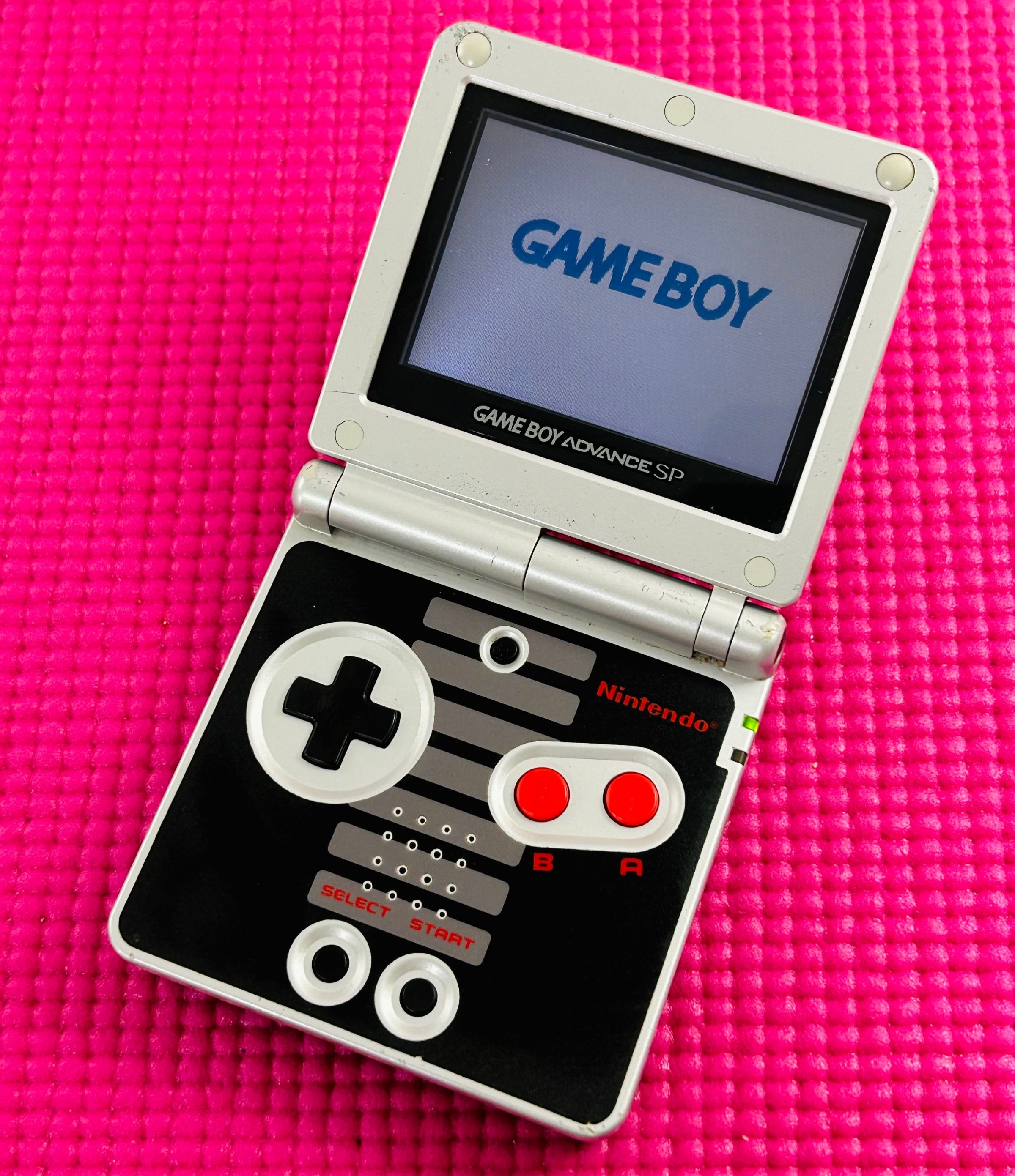
Nintendo addressed the visibility problem directly with the Game Boy Advance SP in 2003. The AGS-001 model folded into a compact square, used a rechargeable battery, and included a frontlit display. Suddenly, playing in a dark room did not require a clip-on accessory.
The SP was a major improvement, but its frontlight could make colors appear muted and add a slightly washed-out layer over the image. The smaller clamshell also changed the ergonomics. Some players loved the portability, while others still preferred the original GBA’s wider grip. That combination created lasting demand for a system with the AGB-001 body and a better screen.
The AGS-101 becomes the screen to beat
Nintendo later released the AGS-101 revision with a true backlit display. Instead of shining light across the front of the panel, the system illuminated the image from behind. Colors looked richer, lighting appeared more even, and games were easier to see in a wider range of conditions.
Enthusiasts eventually adapted AGS-101 panels for use in original GBA systems. This GBA backlight mod combined the comfortable AGB-001 form factor with Nintendo’s best official GBA-family display. For years, it was considered the premium way to modernize an original Game Boy Advance.
It was not a casual upgrade. Builders had to find a genuine AGS-101 screen, match it to the correct adapter or ribbon cable, trim internal shell plastic, align the display, and sometimes solder connections for stable power or brightness control. Board revisions also mattered because original GBA systems used different display connectors.
The mod became expensive as donor screens grew scarce. Every transplanted panel also meant removing a valuable component from an existing SP. Even so, the AGS-101 conversion proved there was real demand for high-quality displays in the original shell. That demand encouraged manufacturers to create purpose-built alternatives.
Flash Cartridges and Software Experimentation
Hardware modification was only one side of the scene. Game Boy Advance flash cartridges gave developers and enthusiasts a way to load software onto rewritable media and run it on a real console. Early products often relied on dedicated writer hardware and relatively small amounts of flash memory. Using them could involve patching software, managing save types, and working around slow transfer tools.
Those limitations did not stop experimentation. Flash cartridges supported homebrew development, fan translations, ROM hacks, hardware testing, and personal archival workflows. They also gave programmers a practical route from code running on a computer to software running on an actual GBA.
Legal note: It is important to separate the technology from piracy. A flash cartridge can be used for legitimate homebrew, public-domain software, development, translation patches, and backups created from cartridges a user owns. Downloading or distributing copyrighted games without permission is a different issue, and this article does not provide instructions for doing so.
From early carts to modern storage
Modern products such as the EZ-Flash Omega family and EverDrive GBA X5 Mini are far more convenient than early flash solutions. They use removable microSD storage, support common GBA save hardware, and present game or homebrew files through on-device menus. The exact features and compatibility vary, so buyers should check current documentation before choosing a cart.
Flash cartridges helped keep interest in original hardware alive. A restored or upgraded GBA was no longer limited to aging retail cartridges alone. It could serve as a homebrew machine, a development target, and a convenient way to explore fan-made projects on authentic hardware.
The IPS Display Revolution
Purpose-built screens replace donor hunting
Around the end of the 2010s, aftermarket IPS kits changed the economics and accessibility of Game Boy Advance modding. IPS stands for in-plane switching, a display technology known for wide viewing angles and consistent color. More importantly, these kits were designed as upgrades rather than harvested from another Nintendo system.
FunnyPlaying became one of the most visible suppliers, but it was not the only company involved. Competing manufacturers, resellers, small designers, and community reviewers all helped improve the category. New revisions appeared quickly, with changes to scaling, brightness, installation, power draw, and compatibility.
Compared with an AGS-101 transplant, an IPS kit could provide a bright image, excellent viewing angles, and readily available replacement parts without sacrificing a donor SP. Many kits included a driver board and ribbon cable that reduced the amount of custom wiring required. Pre-cut shells and alignment brackets made installation much less frustrating.
Laminated displays and easier installation
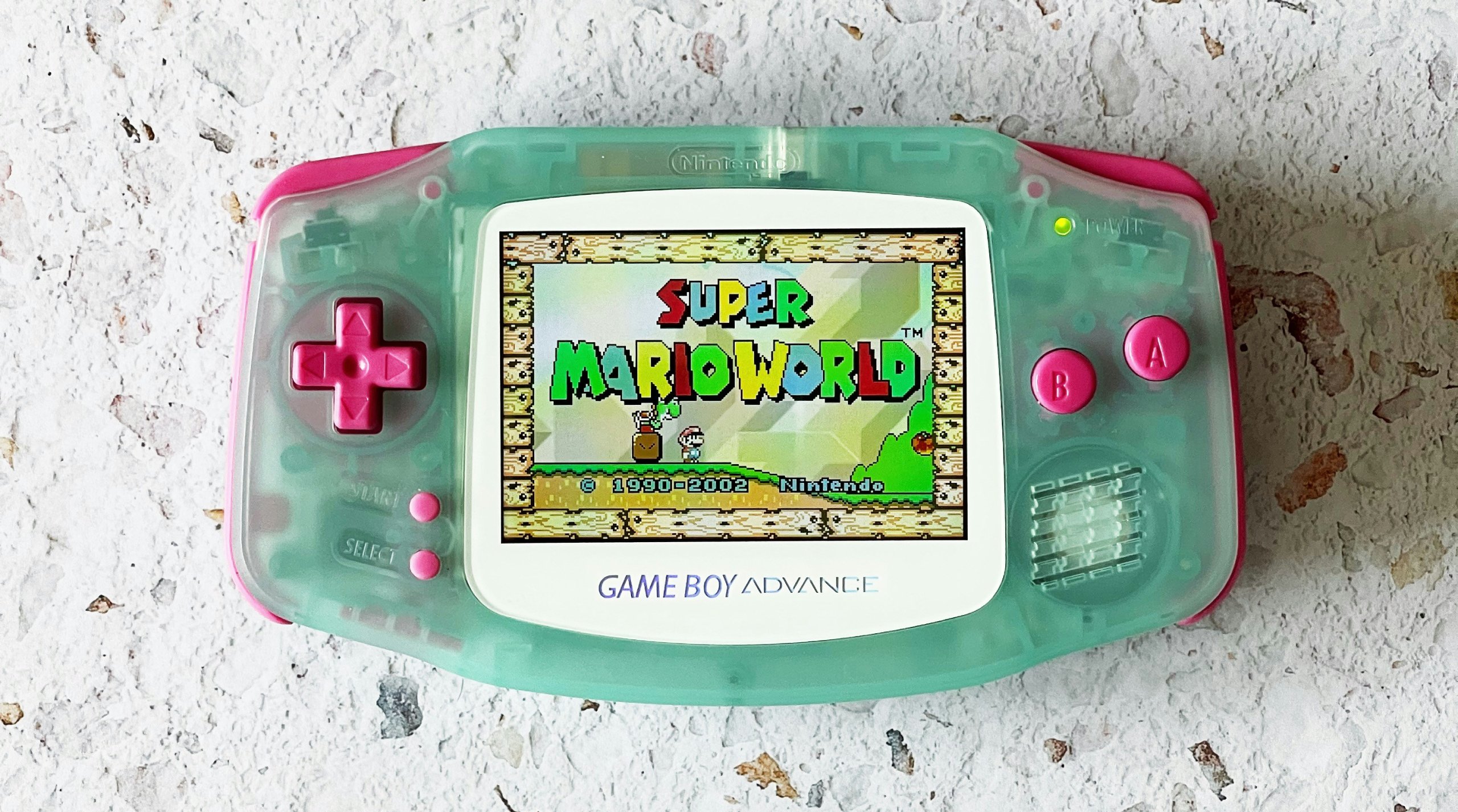
The market continued to mature. Screen-ready shells arrived with the necessary internal space already molded or cut. Laminated assemblies bonded the lens directly to the LCD, reducing dust risk and making alignment more consistent. Some kits added touch sensors, button-controlled brightness, color modes, pixel effects, and on-screen menus.
Modern no-solder and low-solder designs have made the Game Boy Advance IPS screen mod approachable for beginners. “No-solder,” however, does not mean risk-free. Ribbon cables remain delicate, shell tolerances vary, and pressure from an overtightened screw can damage a display. Optional brightness controls may also require soldering even when the basic screen works without it.
IPS kits also introduced trade-offs. A bright modern panel usually consumes more power than the original reflective screen. Some kits scale the image differently or offer visual effects that do not perfectly reproduce the native LCD. Purists may still prefer an original panel or AGS-101 display, while everyday players often value readability and convenience.
GBA Mods Move Beyond the Screen
Shells, buttons, and visual identity
Once display upgrades became easier, builders began treating the entire console as a design project. GBA shell replacement options expanded from basic reproductions to translucent colors, soft-touch finishes, themed designs, and shells made specifically for laminated screens.
Buttons, silicone membranes, glass lenses, battery covers, stickers, and matching accessories made it possible to build a coherent color scheme. For some owners, this was restoration: replacing yellowed, cracked, or deeply scratched parts. For others, it was personal expression. Both approaches became central to modern retro handheld modding.
Part quality can vary widely. Poor shells may have rough seams, inaccurate screw posts, weak hinges, or buttons that bind. A careful builder test-fits components before final assembly and keeps original parts labeled and stored, especially when working on a collectible system.
Rechargeable power and USB-C
The original AGB-001 runs on two AA batteries. That remains simple and reliable, particularly with good rechargeable cells. Still, many owners prefer an internal lithium-ion battery with USB-C charging. Drop-in battery packs can provide a clean installation without permanently modifying the console, while more advanced projects add charging ports or custom power boards.
Battery safety: Power work deserves more caution than a shell swap. Lithium-ion cells need proper charging, protection, and physical clearance. A larger capacity printed on an unknown battery is not proof of quality. Reputable suppliers, protected cells, documented designs, and careful inspection matter more than an impressive label.
Audio, power, and specialty modifications
A GBA audio mod may replace the speaker, add an amplifier, or address noise in the audio path. More volume is easy to advertise, but clean sound depends on the condition of the original board, power quality, speaker matching, and installation. An amplifier cannot repair every source of hiss.
Other projects include replacement capacitors, cleaned or rebuilt power switches, power-conditioning boards, status LEDs, clicky shoulder buttons, video output, wireless experiments, and custom PCBs. Some are practical repairs. Others are enthusiast engineering exercises that explore what the platform can do.
How Each GBA Model Differs
The three main GBA designs invite different kinds of work. There is no single “best” model to modify. The right choice depends on comfort, portability, originality, and how much risk the builder wants to accept.
| Model | Typical difficulty | Common goals | Main concerns |
|---|---|---|---|
| Original GBA (AGB-001) | Beginner to intermediate | IPS display, shell, buttons, rechargeable power, audio | Screen alignment, power draw, 32-pin versus 40-pin board compatibility |
| GBA SP (AGS-001/AGS-101) | Intermediate | Shell restoration, screen upgrade, battery replacement, USB-C charging | Fragile ribbon cable, hinge installation, tight internal space, preserving an original AGS-101 |
| Game Boy Micro | Intermediate to advanced | Faceplates, batteries, cosmetic restoration, careful repair | Very compact internals, scarcer parts, collector value, limited room for modifications |
Original GBA: the flexible all-rounder
The AGB-001 remains the most versatile platform for a full custom build. Its roomy horizontal body accommodates screen drivers, replacement shells, rechargeable battery packs, and audio components more easily than the smaller models. Its familiar ergonomics are a major reason people continue to invest in it.
GBA SP: compact, popular, and hinge-sensitive
GBA SP modding often begins with worn shells, tired batteries, or damaged hinges. Reshelling an SP is more delicate than reshelling an original GBA because the display ribbon must pass through the hinge without twisting or tearing. The original hinges should also be removed and reinstalled carefully if they are still in good condition.
Owners of an AGS-001 may install a modern display, while AGS-101 owners often focus on preservation. USB-C charging boards are popular, but designs differ. Some support charging only, while others may support additional power-delivery behavior. Buyers should verify the capabilities of the exact board rather than assuming every USB-C mod works the same way.
Game Boy Micro: small system, small margin for error
Game Boy Micro mods are less common. The system already has a bright screen and a rechargeable battery, but its tiny enclosure leaves little room for new hardware. Replacement batteries, faceplates, buttons, and careful restoration are the usual goals. Scarcer parts and collector interest make irreversible modification harder to justify.
The Modern Modding Ecosystem
Tutorials, communities, and open projects
The modern scene is easier to enter because information is everywhere. YouTube tutorials let beginners watch a complete installation before opening a console. Reddit and Discord communities help diagnose display artifacts, power faults, and shell-fit problems. GitHub gives open-source hardware designers a place to publish board files, firmware, and documentation.
Specialty retailers have also made parts easier to buy. Instead of tracking down an adapter from one seller and a shell from another, a builder can often purchase a matched screen, shell, buttons, and battery solution from one store. Etsy shops and independent builders offer pre-modded consoles for people who want the finished experience without the installation.
The preservation debate
Not everyone agrees on how far a build should go. Preservation-minded collectors may prefer to clean a console, repair only what has failed, and keep the original shell and display. Other enthusiasts want an “ultimate” daily-use GBA with a laminated IPS panel, rechargeable battery, new audio hardware, and a completely different visual identity.
Both positions are reasonable. Original hardware is finite, and historically interesting variants deserve care. At the same time, a damaged or common console can become useful again through thoughtful modification. Reversible upgrades offer a practical middle ground. Save every original component, avoid cutting a rare shell when a pre-cut replacement exists, and document what was changed.
Quality, safety, and collector value
A large marketplace brings inconsistent quality. Counterfeit branding, weak batteries, inaccurate shells, noisy amplifier boards, and poorly documented screen revisions all appear in the supply chain. Reputable sellers are valuable not only because of the product itself, but because they publish compatibility notes and provide support when something goes wrong.
Modding can increase usefulness and personal value, but it does not automatically increase resale value. A buyer may pay more for excellent workmanship, yet a collector may place a premium on an untouched console with original packaging. Build for your own goals, and treat claims about “investment value” with caution.
Why GBA Modding Matters
Game Boy Advance restoration is part of a wider effort to keep aging electronics useful. Replacement screens make games readable. New batteries keep portable systems portable. Fresh switches, capacitors, and speakers return failing consoles to service. Flash cartridges and homebrew tools keep the hardware interesting to developers as well as players.
The hobby also connects several communities that do not always overlap: retro collectors, repair advocates, electronics learners, artists, game developers, and nostalgic players. A shell swap may lead someone to basic soldering. A screen installation may lead to power diagnosis. A homebrew project may lead to PCB design or embedded programming.
That is the lasting significance of Game Boy Advance modding history. The community did more than fix a dim screen. It developed a shared body of knowledge that lets an old handheld remain visible, repairable, customizable, and fun to use.
Conclusion: More Than an Upgrade
Modern GBA modding represents preservation, accessibility, personalization, repairability, and hobbyist engineering in one compact device. A restored stock console preserves Nintendo’s original design. An IPS-equipped daily driver makes the library easier to enjoy. A custom shell turns familiar hardware into something personal. A careful repair keeps another motherboard out of the waste stream.
The best build is not necessarily the one with the longest parts list. It is the one that matches its owner’s needs and respects the hardware. That might mean cleaning an original AGB-001 and using rechargeable AA batteries. It might mean repairing an AGS-101 hinge. It might also mean creating a fully customized console with modern display, power, and audio hardware.
More than two decades after the GBA arrived, its modding community continues to prove that aging hardware does not have to become obsolete. With good documentation, safe parts, and a little patience, it can become useful all over again.
Frequently Asked Questions
What is the most popular Game Boy Advance screen mod?
Modern IPS kits are the most common choice for players who want a bright, clear display with wide viewing angles. Laminated kits simplify alignment, while non-laminated kits may offer more flexibility and easier part replacement.
What is the difference between AGS-001 and AGS-101?
The AGS-001 SP uses a frontlit screen, while the later AGS-101 uses a backlit screen. The AGS-101 generally produces richer color and more even lighting, which is why its displays became sought-after for original GBA conversions.
Are Game Boy Advance flash cartridges legal?
The hardware itself has legitimate uses, including homebrew development, fan projects, and personal backups. Copyright law still applies to game files. Users should create backups from media they own and avoid downloading or sharing copyrighted games without permission.
Is GBA modding suitable for beginners?
Yes, if the first project is chosen carefully. Cleaning, button replacement, and some no-solder screen kits are approachable. Power modifications, fine-pitch soldering, board repair, and Game Boy Micro work require more experience.
Do GBA mods increase collector value?
Not automatically. Quality custom work may appeal to players, but collectors often value originality. Rare shells and well-preserved AGS-101 or Micro systems may be worth more when left substantially original.
What are the main risks of GBA modding?
Common risks include torn ribbon cables, damaged solder pads, overtightened screws, poor shell fit, short circuits, and unsafe lithium-ion battery installations. Testing incrementally and buying documented parts from reputable suppliers reduces those risks.
Sources and Further Reading
- ConsoleMods: Game Boy Advance Mods Wiki
- ConsoleMods: Game Boy Advance Flash Carts
- Wired: Nintendo Game Boy Hackers Are Building a Better Retro Console
- ROMchip Journal: Liquid Crystal Discourse: Advancing a History of Handheld Screen Mods
- Game Boy Resource: Game Boy Mods
- GBASP.ru: The History of GBA Flash Cartridges, Part 1
- GBASP.ru: The History of GBA Flash Cartridges, Part 2
- Wikipedia: Game Boy Advance
- Wikipedia: Afterburner (modification kit)